Navigating Language Barriers: The Role of Translation Services in UK Scientific Poster Success
Translation services for UK Scientific Posters are essential for researchers who aim to communicate their findings to a global audience. These translation services must be precise and culturally sensitive to accurately convey complex scientific conte…….

Translation services for UK Scientific Posters are essential for researchers who aim to communicate their findings to a global audience. These translation services must be precise and culturally sensitive to accurately convey complex scientific content, including specialized terminology and data visualizations. The future of such translations is promising with the integration of AI and machine learning technologies, which are expected to enhance the precision and cultural adaptability of translations in real-time, facilitating better understanding and international collaboration in the scientific community. By leveraging these advanced tools, UK researchers can expand the reach and impact of their work, ensuring that critical research is accessible and comprehensible worldwide, thereby fostering global scientific progress.
navigating the intricacies of global scientific exchange, the role of translation services in enhancing the dissemination and comprehension of UK scientific posters assumes paramount importance. This article delves into the multifaceted nature of communicating complex research findings across language barriers, highlighting the necessity for multilingual communication within the international research community. We explore the design standards and practices specific to UK scientific posters, evaluate the effectiveness of translated materials in diverse settings, and discuss best practices for conveying intricate scientific content to broader audiences. Cultural nuances’ impact on translating scientific materials is scrutinized, with case studies illustrating successful translations and presentations. The article also addresses the challenges researchers face when communicating through translated posters and outlines strategies to maintain scientific integrity during the translation process. Furthermore, we look ahead to future trends in translation services for UK scientific posters and international collaboration, ensuring that these critical contributions to global science are accessible and impactful across linguistic and cultural boundaries.
- Understanding the Role of Translation Services in UK Scientific Presentations
- The Necessity of Multilingual Communication in Global Research Contexts
- Overview of UK Scientific Poster Design Standards and Practices
- Evaluating the Effectiveness of Translated Scientific Posters in Various Settings
- Best Practices for Translating Complex Scientific Content for Broader Audiences
- The Impact of Cultural Nuances on the Translation of Scientific Materials
- Case Studies: Successful UK Scientific Poster Translations and Presentations
- Challenges Faced by Researchers in Communicating Through Translated Posters
- Strategies for Maintaining Scientific Integrity During the Translation Process
- Future Trends in Translation Services for UK Scientific Posters and International Collaboration
Understanding the Role of Translation Services in UK Scientific Presentations

In the realm of scientific discourse, UK researchers often present their findings to diverse international audiences. A pivotal aspect of this process is the communication of research through posters, which must be accessible to all participants regardless of linguistic background. Here, translation services for UK Scientific Posters play a crucial role in bridging language barriers and facilitating clear understanding. These services ensure that the complex data and nuanced findings depicted on scientific posters are accurately conveyed into various languages, thereby expanding the reach and impact of the research. The use of professional translation services not only enhances global collaboration but also underscores the UK’s commitment to inclusivity and international engagement in the scientific community. By providing multilingual versions of scientific posters, these services enable UK researchers to present their work with greater clarity and efficacy, thereby fostering a more inclusive and collaborative environment during scientific presentations.
Furthermore, the integration of translation services for UK Scientific Posters is instrumental in maintaining the integrity and precision of scientific data. Accurate translations are imperative as they avoid misinterpretation and ensure that the scientific community can engage with the research without linguistic barriers. This meticulous attention to detail in translation helps maintain the high standards of UK research on the global stage, allowing for informed discussions and collaborations that could potentially lead to new advancements. The strategic use of these services underscores the importance of clear communication in scientific presentations and demonstrates the UK’s dedication to being at the forefront of international scientific endeavors.
The Necessity of Multilingual Communication in Global Research Contexts

In an increasingly globalized research landscape, the necessity of multilingual communication cannot be overstated, especially in the context of UK scientific presentations. Researchers from diverse linguistic backgrounds often collaborate, making it imperative to convey complex scientific information across language barriers effectively. Translation services for UK Scientific Posters play a pivotal role in this regard, ensuring that research findings are accessible and intelligible to an international audience. These services facilitate the accurate translation of technical terminology and methodological nuances that are critical for scientific understanding. By providing multilingual versions of posters, researchers can expand their reach beyond monolingual English-speaking conferences, thereby enhancing the impact and visibility of their work. This not only aids in fostering global collaboration but also opens up opportunities for UK scientists to engage with a wider spectrum of peers across the world, enriching the scientific dialogue and leading to more innovative research outcomes.
The integration of translation services into the presentation of UK Scientific Posters is a testament to the country’s commitment to inclusive science communication. In global scientific contexts, where participation is not limited by language proficiency, these services become indispensable. They empower researchers to present their findings in the languages most understood by their audience, which can significantly improve the reception and discussion of their work. Furthermore, by leveraging professional translation services, UK scientists can navigate international symposiums with greater confidence, ensuring that their contributions are not only heard but also understood, regardless of linguistic barriers. This multilingual approach not only enhances the scientific exchange but also underscores the importance of universal accessibility in the dissemination of knowledge.
Overview of UK Scientific Poster Design Standards and Practices

In the realm of scientific communication within the United Kingdom, poster presentations are a cornerstone for disseminating research findings and fostering discussions among peers. UK scientific poster design standards emphasise clarity, coherence, and visual appeal to effectively convey complex data and concepts. A well-crafted UK scientific poster typically adheres to a structured format that includes an abstract or summary, introduction to the research problem, methodology, results, and conclusion. The layout should be intuitive, guiding viewers through each section with clear headings and concise bullet points. Colour usage is strategic, aiming to enhance readability without overwhelming the viewer. Graphics and charts are selected for their precision and relevance, supporting the text rather than detracting from it.
For researchers who require translation services for UK scientific posters, the emphasis is on maintaining the integrity of the original content while ensuring that the poster communicates effectively with an international audience. These services provide not only linguistic accuracy but also cultural adaptation to ensure that the humour, idioms, and references are appropriate for a global context. Translation for scientific posters goes beyond mere word-for-word translation; it involves a deep understanding of both the source and target scientific communities, ensuring that the message remains clear, precise, and impactful across languages and cultures. This is crucial for researchers who aim to present their findings at international conferences or collaborate with scientists from diverse backgrounds.
Evaluating the Effectiveness of Translated Scientific Posters in Various Settings

In the realm of scientific communication, the dissemination of research findings is a critical component that transcends geographical boundaries. The effectiveness of translated scientific posters in various settings, particularly within the UK, hinges on the precision and cultural nuance provided by specialized translation services for UK scientific posters. These translations ensure that the complex terminology and intricate data presented in posters are accurately conveyed to an international audience. The use of professional translation services not only maintains the integrity of the research but also opens up opportunities for collaboration and dialogue with researchers from diverse linguistic backgrounds. This is particularly important in multidisciplinary conferences and symposia where attendees may have varying levels of proficiency in English, necessitating high-quality translations to facilitate understanding and engagement with the presented work. Moreover, translation services tailored for UK scientific posters enable researchers to navigate cultural differences and effectively communicate their findings across different regions, thereby enhancing the global impact and reach of their research. The adoption of these services is indicative of a commitment to inclusive scientific discourse, where language barriers are skillfully managed to ensure clarity and comprehension.
Best Practices for Translating Complex Scientific Content for Broader Audiences

In the realm of scientific communication, the translation of complex content into accessible language is paramount for engaging broader audiences, including those outside the field of expertise. UK scientists presenting their research at conferences or through scientific posters must consider the diverse backgrounds of potential viewers to ensure clarity and comprehension. Translation services for UK scientific posters play a critical role in this process by transforming intricate data and technical jargon into digestible information that resonates with non-specialists. To achieve this effectively, it is essential to employ best practices such as simplifying language without compromising the integrity of the findings, using clear visuals to complement textual descriptions, and providing context for specialized terms when necessary. Additionally, involving multidisciplinary team members in the review process can offer fresh perspectives and help identify areas where clarification or further explanation is needed. By adopting these strategies, UK scientific posters can bridge the gap between complex research and the interested public, thereby enhancing the impact of the work presented.
Furthermore, the successful translation of scientific content for a wider audience is not solely reliant on the text but also on the design elements of the poster itself. The layout should be intuitive, with a logical flow that guides the reader through the study’s methodology, results, and conclusions. The use of infographics, charts, and diagrams can greatly aid in the interpretation of data, making it more accessible. Utilizing translation services for UK scientific posters that specialize in both content adaptation and visual design can significantly improve audience engagement and comprehension. These services often employ experts who understand the nuances of scientific language and the importance of conveying information accurately while also making it relatable to those unfamiliar with the subject matter. By adhering to these best practices, UK scientists can ensure their posters are not only informative but also inspirational, sparking interest across all sectors of society.
The Impact of Cultural Nuances on the Translation of Scientific Materials

The translation of scientific materials, particularly UK scientific posters, presents a unique set of challenges that are deeply influenced by cultural nuances. Effective communication in the scientific community is paramount; it ensures that research findings are accurately understood and can be built upon by peers globally. Translation services for UK scientific posters must go beyond mere linguistic equivalence to capture the subtleties inherent in scientific language, which often includes technical terminology, specialized jargon, and context-specific references. These services must be adept at navigating the cultural nuances that affect how information is perceived and interpreted across different regions. For instance, what may be considered a standard unit of measurement or an accepted statistical norm in the UK might differ in significance or interpretation in another country. This can have significant implications for the clarity and credibility of the scientific data presented.
Furthermore, the visual elements of a scientific poster, such as charts, graphs, and diagrams, also require careful translation to ensure that they convey the intended meaning across cultural boundaries. Color usage, symbols, and layout conventions can vary widely, potentially leading to misinterpretation if not properly adapted. Translation services for UK scientific posters must therefore be comprehensive, encompassing not only the textual content but also the visual components. By doing so, they facilitate effective global communication, enabling researchers to present their findings with clarity and precision to a worldwide audience, thereby enhancing international collaboration and the progress of scientific discovery.
Case Studies: Successful UK Scientific Poster Translations and Presentations

Challenges Faced by Researchers in Communicating Through Translated Posters

Researchers in the UK often encounter the need to present their findings to international audiences, which can necessitate the translation of scientific posters into languages other than English. This process presents unique challenges that extend beyond the technicalities of language translation services for UK scientific posters. The nuances of scientific terminology and the precision required in conveying experimental methods and results are critical factors that can be lost or misinterpreted if not translated accurately. A key issue arises when idiomatic expressions or specialized jargon do not have direct equivalents in the target language, potentially leading to confusion or miscomprehension among non-English speaking audiences. The visual elements of a poster, such as charts and graphs, must also be adapted to ensure clarity and effectiveness across different cultural contexts. Additionally, the translation process itself can introduce delays, which may affect the timely dissemination of research findings. To mitigate these challenges, researchers should collaborate with professional translation services for UK scientific posters that specialize in both scientific content and the linguistic nuances of their target audience. This ensures that the scientific integrity of the research is preserved and that the poster communicates effectively regardless of language barriers. Choosing translators with a background in science not only facilitates the accurate translation of complex concepts but also enhances the presentation’s appeal to specialist audiences, thereby maximizing the impact of UK research on the global stage.
Strategies for Maintaining Scientific Integrity During the Translation Process

In the realm of scientific communication, maintaining integrity during the translation process of UK scientific posters is paramount to ensure the fidelity and precision of the research findings are preserved. Translation services for UK Scientific Posters must be adept at capturing the nuances of complex data and methodologies, translating them into clear, accurate, and understandable content for an international audience. A robust strategy begins with selecting translation services that specialize in scientific terminology, possess a deep understanding of both source and target languages, and have a proven track record in the field. These experts work diligently to convey technical terms and concepts accurately, avoiding any misinterpretation that could compromise the integrity of the research. Furthermore, a collaborative approach involving researchers, translators, and reviewers ensures that all scientific content is reviewed for both linguistic accuracy and scientific validity. This multi-step process includes the careful selection of terminology, attention to grammatical precision, and an adherence to ethical standards throughout the translation process. By employing these meticulous strategies, UK scientific posters can effectively retain their scientific integrity when presented on a global stage, thereby maintaining the trust in the research and its findings.
Future Trends in Translation Services for UK Scientific Posters and International Collaboration
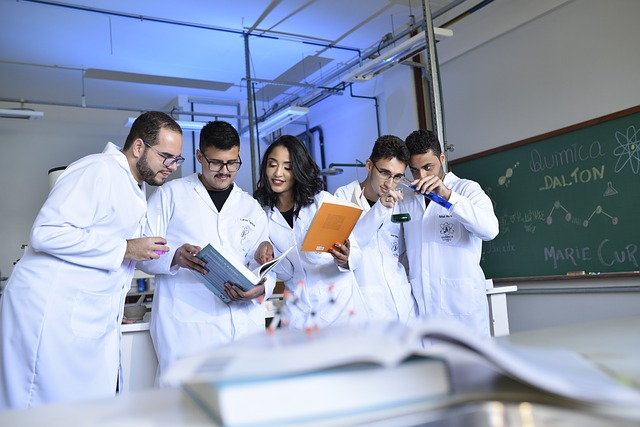
In the realm of scientific communication, the UK’s research community is increasingly engaging in international collaborations, necessitating a robust framework for effective multilingual dissemination. As we look to the future, translation services for UK scientific posters are poised to evolve significantly. The integration of advanced technologies such as artificial intelligence and machine learning promises to enhance the accuracy and cultural nuance of translations, making UK-based research more accessible to a global audience. These innovations not only facilitate comprehension across various linguistic barriers but also enable the exchange of complex scientific concepts with precision. In this evolving landscape, translation services are becoming more dynamic, offering real-time translation capabilities and interactive platforms that allow for seamless communication during international conferences and presentations. This trend underscores the growing importance of making UK scientific posters understandable to a wider, non-English speaking audience, thereby fostering collaboration and knowledge sharing on a global scale. As these services improve, we can anticipate a surge in cross-border scientific endeavors, with UK researchers leveraging translation services to present their findings more broadly, thereby enhancing the impact and reach of their work. International collaboration will be the cornerstone of future scientific advancements, and the role of precise and culturally sensitive translation services for UK Scientific Posters will be indispensable in this endeavor.
In conclusion, the integration of translation services for UK scientific posters plays a pivotal role in the global dissemination and collaboration within the scientific community. The necessity to convey complex research findings across linguistic barriers is not only beneficial but increasingly imperative. This article has delineated the standards and practices of UK scientific poster design, assessed the effectiveness of translated posters, and highlighted best practices for translating scientific content for diverse audiences. It has also addressed the intricate challenges of maintaining scientific integrity during translation and the impact of cultural nuances. The case studies presented demonstrate that with careful strategy and implementation, translation services can effectively enhance the reach and impact of UK scientific posters on an international scale. As science continues to advance and collaboration expands, the demand for professional translation services in this domain is likely to grow, ensuring that UK researchers remain at the forefront of global scientific discourse.